Unlocking Financial Reporting Automation for Growth
Discover how financial reporting automation can transform your finance team. This guide covers step-by-step implementation, tools, and real-world strategies.
By Rishav
15th Feb 2026
Last updated: 15th Feb 2026
At its core, financial reporting automation is about swapping out tedious, error-prone manual tasks for smart technology. This lets finance teams create accurate reports much, much faster. It's the shift that frees up your best people from the mind-numbing work of data collection and reconciliation, allowing them to focus on strategic analysis and actually guiding the business.
Think of it as the difference between navigating with a hand-drawn map and using a real-time GPS. Both might get you there, but one is faster, more accurate, and lets you see what's coming.
Moving Beyond Manual Reporting Chaos

For decades, the financial close has been a predictable fire drill. It’s a marathon of late nights, tangled spreadsheets, and a constant, low-grade anxiety. Finance teams are stuck manually pulling data from systems that don't talk to each other, wrestling with complex reconciliations, and painstakingly formatting reports—all while the clock is ticking.
In a world that demands speed and accuracy, this old-school approach isn't just slow; it's fundamentally broken.
Relying on manual data entry and endless copy-pasting is just asking for trouble. A single misplaced decimal or a broken formula can ripple through an entire report, leading to costly restatements, compliance headaches, and a serious blow to your credibility. In fact, studies show that financial process automation can slash human error by up to 90%, bringing a level of consistency that manual methods simply can't match.
The Pain of Disconnected Systems
Most companies run on a patchwork of technology—an ERP for the books, a CRM for sales, and a chaotic web of spreadsheets holding everything else together. This creates frustrating data silos. Your team ends up spending most of their time just hunting down and checking information instead of actually analyzing it. This process is a massive bottleneck, delaying the financial close and forcing leaders to make decisions with stale data.
This is exactly where the need for a change becomes painfully obvious. Financial reporting automation is designed to fix these deep-rooted frustrations by creating a single, connected flow of information. It directly tackles the biggest pain points of manual reporting:
- Time-Sucking Data Aggregation: Automation does the heavy lifting, eliminating the need to manually pull data from different platforms. This can save hundreds of hours every single reporting cycle.
- High Risk of Human Error: By taking manual fumbling out of the equation, automated systems protect your data's integrity from the source all the way to the final report.
- Lack of Strategic Focus: It’s a sad reality that finance professionals often spend 75-80% of their time just collecting data. Automation completely flips that ratio, turning them into the strategic advisors they were meant to be.
The real goal here isn’t just to speed up the old, broken process. It's about completely reinventing the finance function—transforming it from a backward-looking cost center into a forward-looking strategic partner that drives real business value.
A New Strategic Approach
Ultimately, financial reporting automation is much more than a simple tech upgrade; it represents a fundamental strategic shift. It's about trading static, historical spreadsheets for dynamic, real-time dashboards that drive confident, decisive action.
Instead of your team spending weeks building reports that are already out-of-date by the time anyone sees them, they can deliver instant insights that help steer the business forward.
Modern platforms like FlyDash are at the heart of this change. They give teams the power to build the exact tools they need—from automated data connectors to interactive dashboards—without getting lost in complicated code. This is how you turn data drudgery into strategic insight, letting your team focus on what really matters: growth.
Understanding Financial Reporting Automation
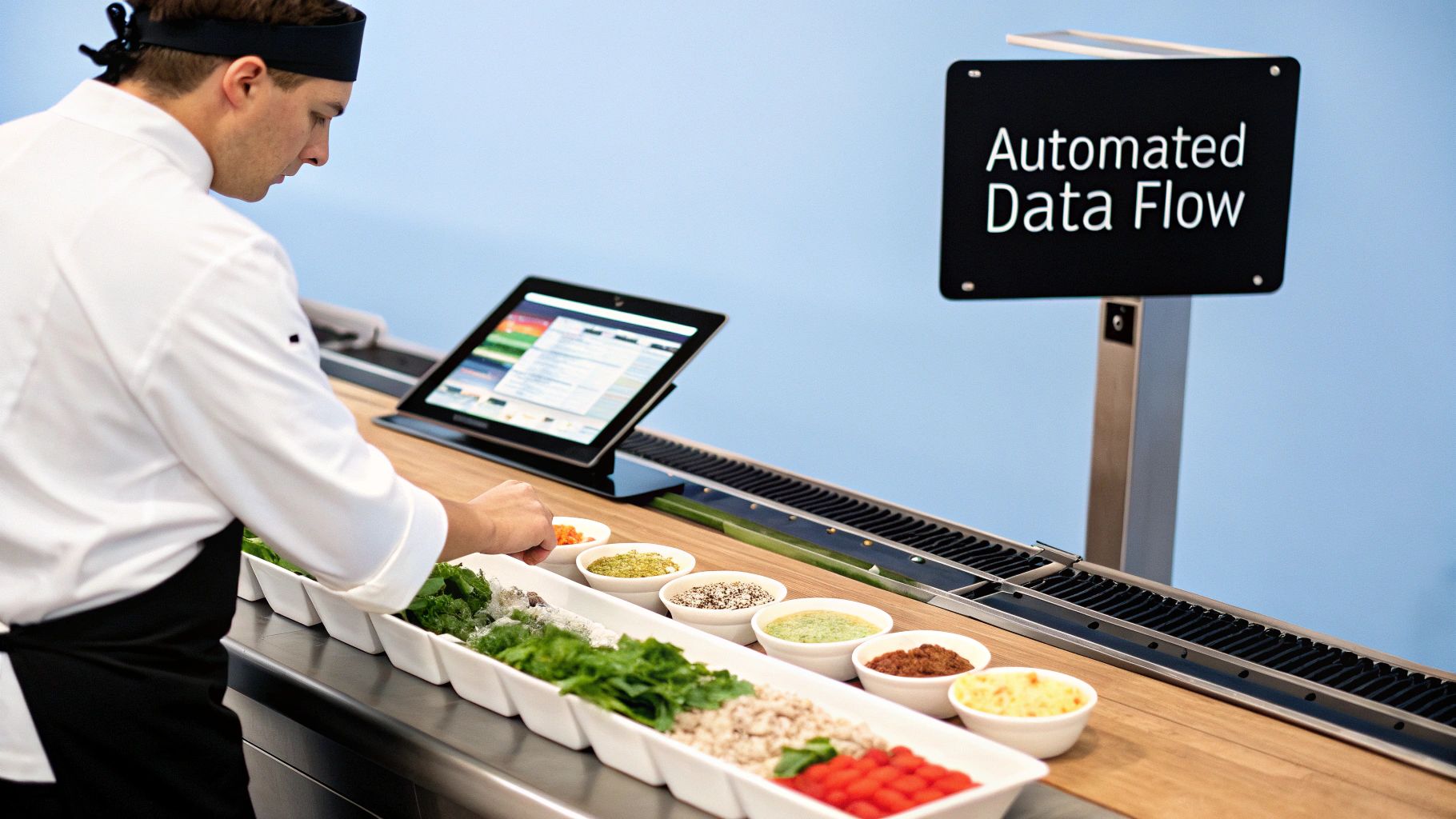
So what exactly is financial reporting automation? It's much more than a fancy macro or a new piece of software. It’s a complete system.
Think of it like a professional kitchen running on autopilot. Raw ingredients (your financial data) are pulled automatically from their sources. They’re then prepped and cooked according to a precise recipe (your business rules), and served up as a perfect, consistent meal (the final report) every single time. No manual chopping or stirring required.
This interconnected system works behind the scenes, turning messy raw numbers into clear, reliable insights. It’s built to break down the data silos that plague finance teams, creating a single, smooth pipeline of information from its source all the way to the finished statement.
The Automated Data Pipeline
The journey from raw transaction to polished report is a logical, step-by-step process. Each stage builds on the one before it, making sure the final output is accurate, timely, and ready for real analysis.
This automated workflow has three main phases:
- Data Extraction and Collection: The system taps directly into all your critical data sources—ERPs, CRMs, accounting software, and even custom APIs. It pulls the necessary information in real-time, which means no more tedious exporting and copy-pasting.
- Transformation and Consolidation: Once the data is in, it gets cleaned up, standardized, and consolidated. Business rules are applied automatically to handle complex tasks like currency conversions, intercompany eliminations, and account reconciliations. This is where scattered numbers become structured, usable information.
- Report Generation and Distribution: With a clean, verified dataset ready to go, the system generates perfectly formatted financial statements, dashboards, and variance analyses from pre-built templates. These reports can then be sent out automatically to the right stakeholders, so everyone is looking at the same up-to-date information.
This whole approach creates what’s known as a 'single source of truth'. When everyone in the company is working from the same verified numbers, the endless debates over whose spreadsheet is correct finally disappear. The conversation can shift from arguing about the data to figuring out what it actually means for the business.
To put it into perspective, let's compare the old way with the new.
Manual vs Automated Financial Reporting at a Glance
This comparison highlights the fundamental differences in process, time, accuracy, and strategic impact between traditional manual methods and a fully automated system.
| Aspect | Manual Reporting | Automated Reporting |
|---|---|---|
| Data Gathering | Hours or days of manual exporting and copy-pasting from multiple systems. | Real-time, automatic data extraction from all connected sources. |
| Accuracy | Prone to human error (typos, formula mistakes, version control issues). | Highly accurate with built-in validation rules and data integrity checks. |
| Speed | Slow, labor-intensive process, especially during month-end close. | Extremely fast, generating complex reports in minutes or even seconds. |
| Scalability | Difficult to scale; more data or companies add significant workload. | Easily scales to handle growing data volumes and business complexity. |
| Finance Team's Role | Focused on data entry, reconciliation, and repetitive report building. | Focused on analysis, strategic planning, and providing business insights. |
The difference is night and day. One method keeps your team bogged down in the past, while the other frees them up to shape the future.
From Data Cruncher to Strategic Advisor
This isn't just about speeding up a process; it's about transforming the finance function itself. The global trend is undeniable. By 2026, a staggering 75% of finance and accounting teams are expected to be using automation tools—the highest adoption rate across any business function.
Why the rush? Because automation consistently slashes manual reporting efforts by 30-50%, freeing up an incredible amount of time. You can learn more about how automation is reshaping finance on atidiv.com.
The ultimate value of financial reporting automation lies not in the reports it creates, but in the human potential it unlocks. It empowers finance professionals to evolve from data crunchers into strategic advisors who can proactively guide the business toward its goals.
When your team is no longer trapped in the monotonous cycle of manual reporting, they can finally apply their expertise to high-value work. They can focus on forecasting, scenario modeling, and uncovering hidden growth opportunities. They become true partners to the rest of the business, using data to tell a story and drive smarter decisions.
The Real-World Impact of Financial Reporting Automation
Making the switch from manual spreadsheets to an automated system isn't just a simple operational tweak—it's a strategic move that pays real dividends across your entire company. The true value of financial reporting automation is about much more than just saving a few hours. It’s about achieving a whole new level of efficiency, gaining bulletproof accuracy, unlocking deeper business insights, and setting yourself up to scale effortlessly.
These aren’t just fuzzy concepts; they are tangible wins that directly boost your bottom line, slash your risk, and free up your team to focus on what really matters: driving growth. Let's break down what this actually looks like in practice.
From Days to Minutes: A Radical Leap in Efficiency
The first thing you’ll notice is the incredible speed. Tasks that used to eat up days of tedious, mind-numbing work—pulling data from ten different places, reconciling accounts, and wrestling with report formatting—can now be done in minutes.
Picture this: your CFO needs an urgent cash flow analysis right before a big board meeting. In a manual world, that request would send the finance team into a frantic scramble, pulling them away from everything else for hours. With an automated system, that same CFO can generate a real-time, perfectly accurate cash flow statement with a single click. The answer is there, instantly.
This isn’t just a month-end luxury. This kind of speed becomes part of your daily operations, giving leaders the agility to react to market shifts, investor questions, and new opportunities without missing a beat.
Bulletproof Accuracy and Effortless Compliance
Let's be honest, human error is a fact of life in any manual process. A single typo, a busted formula, or an old version of a spreadsheet can cause serious headaches, leading to bad decisions, compliance fines, and a loss of trust from stakeholders. Automation all but eliminates this risk by taking human hands off the most repetitive, error-prone tasks.
Think about a compliance officer gearing up for the annual audit.
- The Old Way: They spend weeks chasing down documents, trying to trace transactions through a labyrinth of spreadsheets, and just hoping it all ties out. The whole process is stressful and leaves way too much room for mistakes.
- The Automated Way: The system provides a clean, unchangeable audit trail. Every single number in every report can be traced back to its source transaction in seconds. Built-in checks and validation rules ensure the data is solid from start to finish, turning a high-stakes audit into a routine, low-stress check-up.
This builds a foundation of trust. When you know your numbers are always right and fully auditable, you can make decisions with real confidence and face regulatory scrutiny without breaking a sweat.
Deeper Strategic Insights for Smarter Decisions
This might be the most powerful benefit of all. Financial reporting automation has the power to change the finance team’s role from just keeping score to helping write the playbook for the future. When your experts are freed from the drudgery of data entry, they can finally put their skills to work on high-value analysis.
Instead of just reporting on what happened last quarter, they can start answering the questions that truly matter:
- Which product lines are actually our most profitable?
- Where are we seeing weird budget variances, and what’s causing them?
- How would a price change impact our revenue forecast for next year?
This isn’t a far-off fantasy; it's happening right now. Gartner predicts that by 2026, 90% of finance functions will be using at least one AI-powered solution for real-time reporting and forecasting. This tech pulls data from all over the business into live dashboards, finally killing off static spreadsheets in favor of dynamic tools that flag anomalies and summarize key takeaways automatically. You can learn more about how automation trends in finance are evolving on mercerbradley.com.
Scale Your Business, Not Your Headcount
As your company grows, so does the complexity of your financial reporting. New products, new markets, and acquisitions can make the manual workload explode. In a traditional setup, that means you have to keep hiring more people just to keep your head above water.
Automation shatters that old model. A good automated reporting system is built to scale. It can handle a tenfold increase in transaction volume without needing a tenfold increase in manual effort. This lets your company grow efficiently, expanding its operations without having to proportionally blow up the finance department's budget. Your team can support a much bigger, more complex business without getting buried, making sure your financial infrastructure helps you grow instead of holding you back.
Your Implementation Roadmap
Making the move to automated financial reporting can feel like a massive undertaking. The key is to treat it not as one giant leap, but as a series of deliberate, well-planned steps. The most successful teams don't try to boil the ocean; they start small, prove the value, and build from there. This roadmap will help you navigate the journey from manual grunt work to automated clarity.
Think of it as delivering quick wins that build confidence and get everyone on board for the bigger picture.
Phase 1: Define Your Starting Point
Before you can build a better future, you have to get brutally honest about the present. The first step is to map out your current financial reporting workflows—and I mean really map them out. Get into the weeds. Pick a critical report, like the monthly P&L, and trace its journey from start to finish. Identify every manual copy-paste, every data export, and every person involved.
This exercise is incredibly revealing. It will immediately shine a spotlight on the biggest bottlenecks and time sinks. You’ll see exactly where your team is burning hours on low-value tasks, like pulling CSVs from three different systems or manually chasing down numbers for a reconciliation. These are your prime targets for automation.
The goal isn’t to automate a broken process; it's to redesign it for efficiency. By mapping what you do now, you gain the clarity to simplify workflows before you bring in technology. You're building a smarter system, not just a faster version of a flawed one.
Phase 2: Set Clear Goals and Choose Your Tools
With your pain points identified, you can set real, measurable goals. Vague ambitions like "improve efficiency" won't cut it. You need concrete targets that you can actually track.
- Reduce the month-end close cycle from ten days down to five.
- Cut manual data entry errors in variance reports by 95%.
- Free up 40 hours per month for the finance team to dig into strategic analysis.
These KPIs become your North Star. With clear goals, you can start picking the right tools for the job. This is a critical decision. Resist the temptation of rigid, all-in-one systems that lock you into a single vendor. Instead, look for flexible platforms with strong integrations that can talk to your existing ERP, CRM, and databases.
Modern tools like FlyDash are built for this. They let you connect your existing systems to build custom dashboards and automated reports that fit your specific needs, without having to rip out everything you already have.
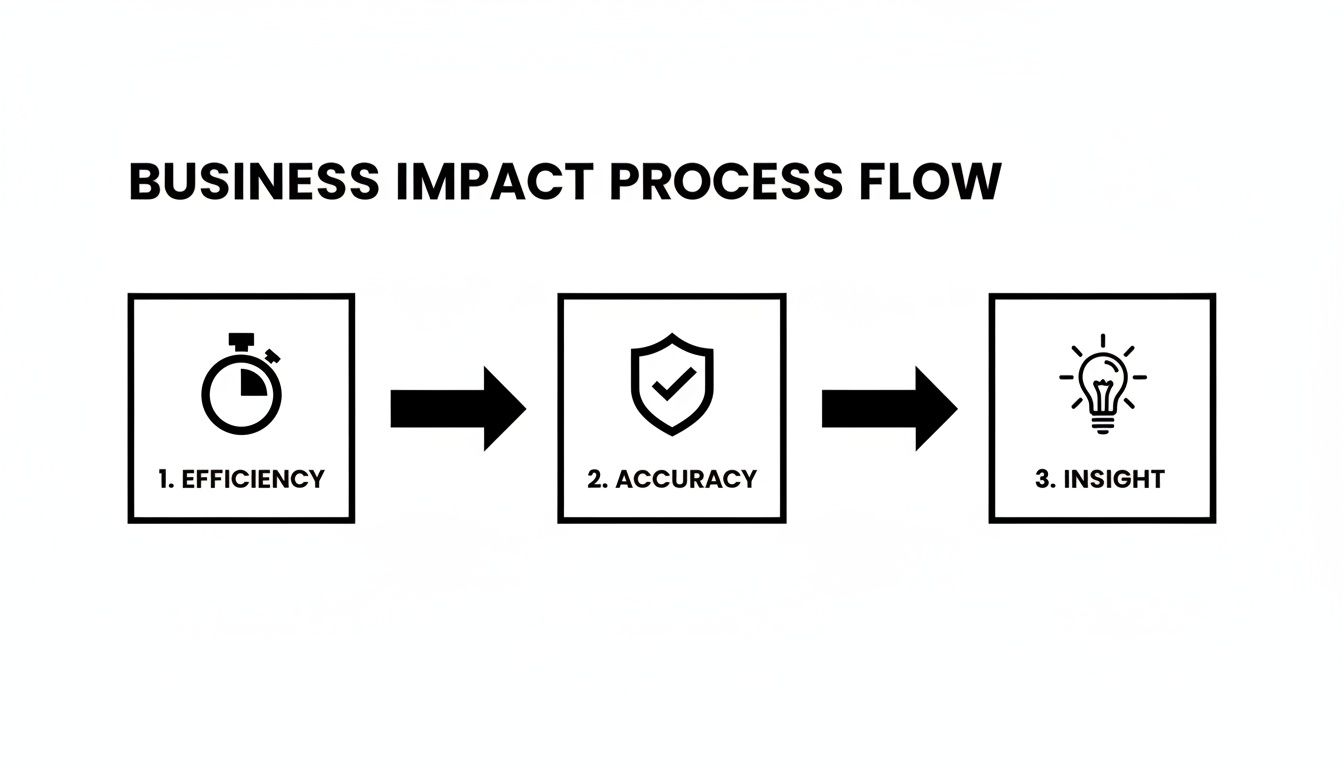
The real magic here is pulling all that scattered information into one live, unified view—that’s the bedrock of good financial reporting automation.
Phase 3: Launch a Pilot Project
It’s time to get your hands dirty. Start with a pilot project focused on one of those high-impact, high-frustration areas you found in Phase 1. Pick a single report that’s notoriously time-consuming but essential for the business.
Automating just this one process acts as your proof of concept. It shows everyone—from the finance team to the executive suite—the real, tangible value of this initiative. A successful pilot builds incredible momentum and makes getting the resources for a wider rollout much, much easier. It's also your chance to work out the kinks in a controlled setting and fine-tune your approach before going big.
Phase 4: Scale and Empower Your Team
Once you’ve got a successful pilot under your belt, it’s time to scale. Take the same methodical approach—map, set goals, automate—and apply it to your other key reports. As you expand, your focus needs to shift from the tech to the people.
Automation isn’t about replacing your finance team; it’s about upgrading their roles. With the drudgery of manual reporting gone, they can finally focus on what they were hired to do: think strategically.
Provide real training that teaches them how to analyze the data and ask bigger questions, not just how to push a button to generate a report. This cultural shift is the final piece of the puzzle. It’s how you turn your finance department from a historical record-keeper into a forward-looking strategic partner for the entire business.
Common Implementation Pitfalls to Avoid
Kicking off a financial reporting automation project is a big step, but the road is rarely a straight line. I've seen many companies run into the same predictable hurdles that can slow things down, blow up the budget, and make everyone question the whole initiative. Knowing what these traps are ahead of time is the best way to steer clear of them.
A great implementation isn't just about picking the right software. It’s about getting real about the complexities of your data, your processes, and, most importantly, your people. If you understand where things usually go wrong, you can build a smarter strategy that ensures your automation efforts pay off right from the start.
The “Garbage In, Garbage Out” Problem
Here's the most basic rule in automation, and it’s non-negotiable: you can’t automate your way out of bad data. If your source systems—your ERP, CRM, you name it—are a mess of inconsistent or incomplete information, your fancy new automated reports will just give you bad answers, faster. This is the classic "garbage in, garbage out" trap.
Before you even think about building a dashboard, you have to get your data house in order.
- Set Data Standards: Create clear, simple rules for how data is entered and managed everywhere. Consistency is key.
- Do a Data Audit: Go through your existing data with a fine-tooth comb. Find the errors, the duplicates, and the weird inconsistencies. Clean it up before you plug it into any new system.
- Build in Validation: Use your new tools to set up automatic checks that stop bad data from getting into the system in the first place.
Think of this as laying the foundation. Without a solid base of clean, reliable data, anything you build on top of it will eventually crumble.
Paving the Cowpath
Another classic mistake is taking a clunky, inefficient manual process and simply automating it. If your current workflow is full of redundant steps, bottlenecks, and confusing handoffs, just wrapping technology around it doesn’t fix anything. You'll just be doing the wrong thing, faster.
The goal isn't just to pave the cowpath. Real improvement comes from rethinking the entire process, using automation to create a smarter, leaner workflow—not just a speedier version of the old, broken one.
Take a hard look at your current reporting cycle before you start. Ask your team, "Why do we do it this way?" and "Is this step even necessary anymore?" You'll often find that many tasks are just leftovers from old systems or outdated policies. Getting rid of that baggage before you automate is a huge win that too many people miss.
Forgetting About the People
At the end of the day, a tech project is always a people project. If you don't manage the cultural shift that comes with automation, your implementation could be dead on arrival. Your team might worry their jobs are on the line or feel completely overwhelmed by having to learn a new set of tools.
This is a bigger deal than most people think. By 2026, a staggering 54.2% of global finance teams are projected to be stuck in a kind of automation limbo, juggling new tools alongside old manual workarounds. This often happens because the human side of the change was completely overlooked. You can read more about how this automation divide is reshaping finance on rossum.ai.
To get this right, you have to be transparent and focus on empowerment. Frame this change as a way to free your team from tedious data entry so they can become true strategic analysts. Invest in good training, celebrate the small wins, and show them a clear picture of how their roles will become more valuable, not obsolete.
Building Your Automated Future
The idea behind financial reporting automation is fantastic, but how do you actually make it happen? You need the right tools to bridge the gap between your vision and a working reality. A modern automation platform is that bridge, turning your goals into practical workflows that genuinely save time, slash errors, and give you space for strategic thinking.
The trick is to find a solution that's both powerful under the hood and flexible enough to mold to your company's unique processes. We're moving past the days of rigid, one-size-fits-all software. Today's automation is about building custom solutions that work for you, empowering your team to get the exact reports and dashboards they need, right when they need them.
From Idea to Dashboard in Minutes
Picture this: you describe the report you need in plain English, and then watch as the system builds it for you. That’s not science fiction anymore; it’s the reality of AI-powered generation. Forget spending weeks wrestling with clunky dashboard builders or waiting on a developer.
Now, a finance lead can simply type, "Create a dashboard showing monthly recurring revenue and customer acquisition cost, broken down by marketing channel."
The platform takes that request and spins up a fully interactive dashboard in a matter of minutes. This completely changes the game. It collapses the time from idea to insight and puts the power of data directly into the hands of the people who need it, no coding required.
Connecting All Your Data Seamlessly
An automation platform is useless if it can't get to your data. Real financial reporting automation means pulling information from every system your business relies on—your ERP, CRM, billing platforms, and various databases. A must-have feature is the ability to connect to any data source without a fuss.
This should include things like:
- Databases: Direct links to your core systems like PostgreSQL, MySQL, and others.
- APIs: The power to pull data from any cloud service or internal tool with a REST or GraphQL API.
- Warehouses: Smooth integration with modern data warehouses that act as your central hub for information.
By bringing all your data together into one unified view, the platform gets rid of the soul-crushing, error-prone task of exporting and mashing together spreadsheets. Every report is built from a single source of truth, so you can finally have complete confidence in your numbers.
Collaboration and Full Control
Finance isn't a solo activity; it’s a team sport. Your reporting platform should feel like a living, shared workspace, not a static file saved on a server somewhere. Features that allow for real-time collaboration are key, letting multiple people—from analysts to department heads—work on the same reports and see each other's changes instantly.
But here’s the most critical part: you should never be locked into a single vendor. A truly flexible platform gives you full control by letting you export standard, clean code. If you decide to move your dashboards or customize them further down the line, you can. Your work should always belong to you.
This blend of AI-driven speed, easy data connections, team collaboration, and total control is what sets a modern financial reporting automation platform apart. It’s not just about doing old tasks faster; it’s about giving your team the tools to build a smarter, more data-driven finance function.
Frequently Asked Questions
It's natural to have questions when you're thinking about overhauling something as critical as financial reporting. Let's tackle some of the most common ones that come up as teams consider making this move.
Is This Just for Big Companies?
Not anymore. While massive corporations were the first to jump on board, today's automation tools are built for everyone. Cloud-based platforms have completely changed the game, making powerful automation affordable and practical for small and mid-sized businesses.
Frankly, smaller companies often feel the biggest positive impact. When your finance team is lean, freeing them from mind-numbing manual work gives them a huge chunk of their week back.
Will This Make My Finance Team Obsolete?
This is probably the biggest myth out there. The goal isn't to replace your team—it's to empower them.
Think about all the time they spend just chasing down numbers, copying data into spreadsheets, and triple-checking for typos. Automation takes over that grunt work. This frees your experts to do what they were actually hired for: analyzing trends, building forecasts, and acting as strategic advisors to the rest of the business. Their roles shift from number-cruncher to business partner.
The point of automation isn't to cut heads; it's to make the heads you have more valuable. You're turning reactive scorekeepers into proactive strategists.
What's the Toughest Part of Getting Started?
It’s almost never the technology itself. The single biggest hurdle is almost always the quality of the data you’re feeding into the system. The old saying "garbage in, garbage out" is the absolute truth here. Your shiny new automation tool can't work magic with messy, inconsistent data.
Before you even think about signing a contract, you have to get your data house in order. That means:
- Standardizing how data is entered across all your systems.
- Cleaning up the existing mess—fixing errors, deleting duplicates.
- Fixing broken workflows first. Don't just automate a bad process; rethink and improve it.
How Do I Pick the Right Tool?
The two most important words are flexibility and integration. The best tools don't try to cram your business into a rigid box. They should connect smoothly to the software you already rely on, like your ERP, CRM, and accounting platforms.
Look for a good balance between power and usability. You want something robust enough for your finance pros but simple enough that a marketing manager could build a basic report without calling IT. And whatever you do, avoid getting locked into a system that holds your data hostage. Choose a platform that gives you true ownership and control.
Ready to see how fast you can build the financial dashboards you need? With FlyDash, you can describe your ideal report in plain English and watch our AI bring it to life in minutes. Start building for free and transform your financial reporting workflow today.
Ready to Build Your App?
Turn your idea into a production-ready React Native app in minutes.
Free tools to get you started
Free AI PRD Generator
Generate a professional product requirements document in seconds. Describe your product idea and get a complete, structured PRD instantly.
Try it freeFree AI App Name Generator
Generate unique, brandable app name ideas with AI. Get creative name suggestions with taglines, brand colors, and monogram previews.
Try it freeFree AI App Icon Generator
Generate beautiful, professional app icons with AI. Describe your app and get multiple icon variations in different styles, ready for App Store and Google Play.
Try it freeFrequently Asked Questions
RapidNative is an AI-powered mobile app builder. Describe the app you want in plain English and RapidNative generates real, production-ready React Native screens you can preview, edit, and publish to the App Store or Google Play.